


Key Takeaways
- Pooling oil in the intake and play in the shaft point to the turbo itself.
- Boost leaks, actuators, sensors and a blocked DPF can all mimic turbo failure.
- Rule these out before buying a new turbo.
- Live data and a smoke test usually settle it.
The best way to tell if a turbo is bad is to look for signs that point to the turbo itself, then rule out the faults that look similar. Oil pooling in the intake pipes, play in the turbo shaft and a siren-like whine that rises with the revs all point to the turbo. Power loss and warning lights on their own do not, because several other faults cause them too.
Turbo problems rarely appear without warning. The signs usually develop gradually and can be mistaken for general engine wear or changes in driving conditions, so it pays to check before buying parts.
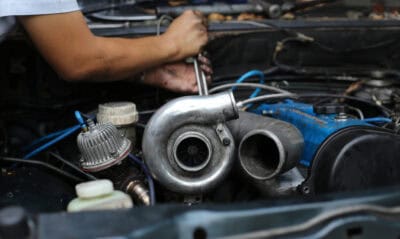
Signs That Point to the Turbo Itself
Some symptoms are shared with many other faults. These ones are much more likely to mean the turbo is worn or damaged.
- Oil pooling inside the intake pipes or intercooler, not just a light film.
- Play in the turbo shaft, or a compressor wheel that has rubbed against its housing.
- A siren-like whine that rises and falls with the engine revs.
- Blue smoke from the exhaust together with rising oil consumption.
- Chipped or bent compressor blades.
For the full list of warning signs drivers notice, see our guide to the signs of a failing turbo.
Faults That Can Look Like a Bad Turbo
A lot of turbos are replaced when the real fault was elsewhere. These are the most common lookalikes, and how to tell them apart.
| Fault | How It Can Feel | How It Differs |
|---|---|---|
| Boost leak | Power loss, loud whistle, underboost code | A split hose, loose clip or cracked intercooler is usually visible. The turbo shaft has no play. |
| Faulty actuator or boost control solenoid | Uneven power, limp mode, boost fault codes | The turbo spins freely but boost is not controlled properly. Often shows in live data. |
| Stuck wastegate | Flat performance or overboost | The wastegate arm will not move freely. See our stuck wastegate guide. |
| Blocked DPF | Power loss and limp mode on diesels | Often comes with a DPF warning light and regular failed regenerations. |
| Faulty EGR valve | Rough running, smoke, power loss | Often sets EGR-specific fault codes rather than boost codes. |
| Faulty boost or airflow sensor | Power loss and warning lights | Readings in live data do not make sense, while the turbo checks out mechanically. |
| Blocked air filter | Sluggish acceleration | The filter is visibly dirty. The fix is a new filter. |
A faulty actuator is one of the most common causes of a wrong diagnosis. Our guide on what a turbo actuator does explains why. A blocked DPF can also damage a turbo over time, which our guide on whether a blocked DPF can cause turbo failure covers.
How a Mechanic Confirms a Bad Turbo
A good mechanic will want to rule out the faults above before replacing the turbo. That usually means reading the fault codes, comparing requested and actual boost in live data, smoke testing the intake for leaks, checking that the actuator moves as it should and inspecting the turbo for shaft play and oil.
Many of these checks can be done at home with a code reader and a torch. Our guide on how to test if your turbo is working takes you through them step by step.
Is It Different for Vans?
The signs are the same, but vans often show them sooner. Carrying tools, equipment or cargo puts more demand on the engine, so turbo problems tend to show up first under load or on long runs at motorway speeds. If a van only loses power when it is loaded, that is still worth investigating.
Why These Symptoms Should Not Be Ignored
A turbo does not work in isolation. When it is not working correctly, extra strain is placed on other engine parts, including sensors, seals and exhaust components. What begins as a minor issue can develop into a wider reliability problem if left.
Not every turbo issue means the unit has completely failed. In some cases, fixing the underlying cause restores normal operation. Where replacement is needed, a reconditioned turbo can offer a reliable option for everyday vehicles.
At Essex Turbos, reconditioned units are tested to meet OEM standards. Each one comes with an unlimited mileage warranty lasting one to two years, depending on the turbo type you choose. Whether you are a trade customer or an everyday motorist, contact us to talk through your options.

FAQs
How can you tell if a turbo is bad or if another engine issue is present?
Look for the signs that point to the turbo itself, such as oil in the intake, shaft play and a rising whine. Then rule out boost leaks, actuator faults, sensors and a blocked DPF. If the turbo checks out mechanically, the fault is likely elsewhere.
Is it safe to keep driving with a faulty turbo?
Driving with a failing turbo can increase the risk of further damage, including to the engine. Our guide on whether you can drive with a blown turbo explains the risks and what to do instead.